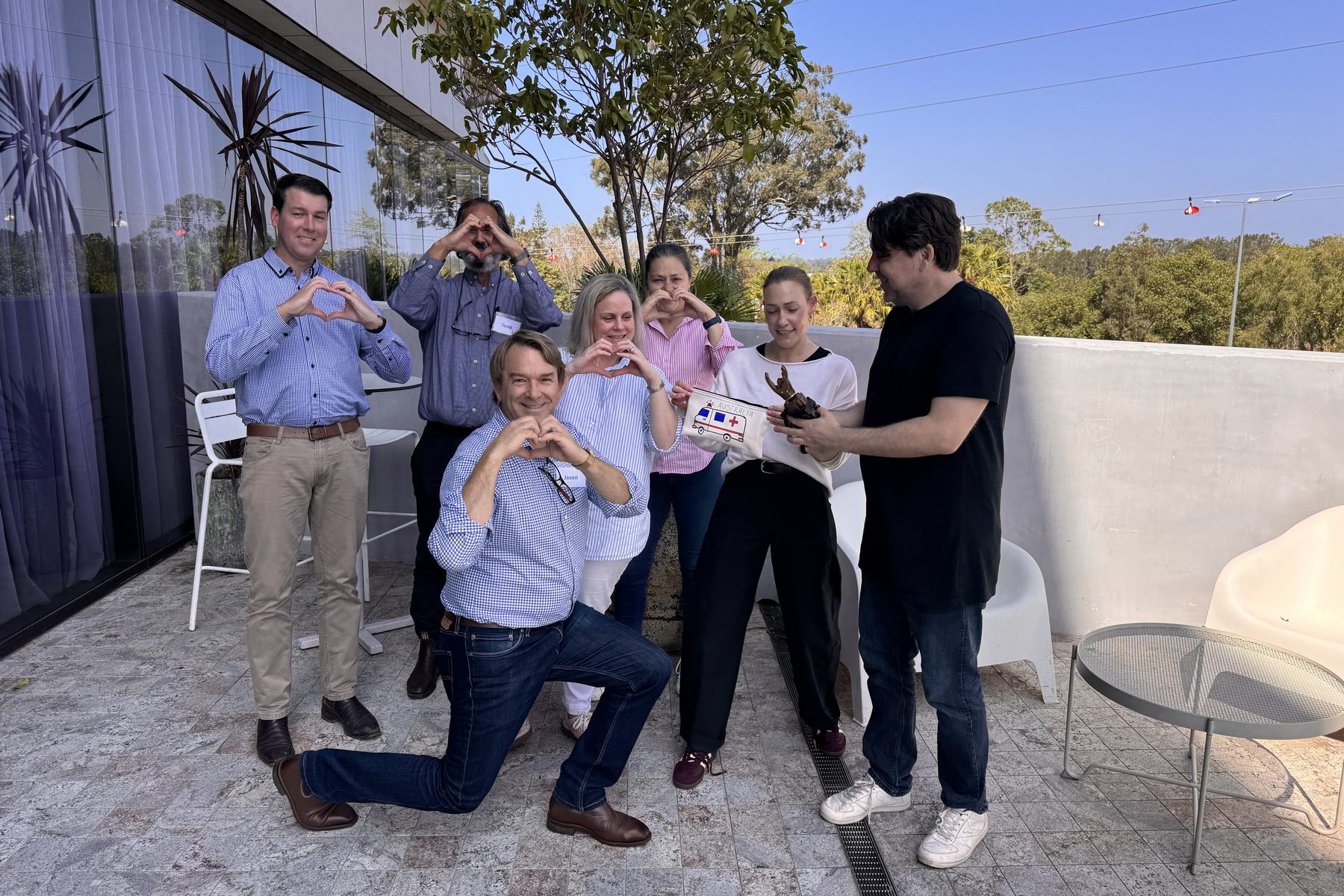
This is a guest blog post by Ric Leahy CSC. Ric is Co-Founder and Director of XEd Space, an Australian executive education provider that delivers leadership programs from the Center for Creative Leadership. Ric works with leaders to help them get the best out of themselves and then get the best out of others. Prior to co-founding XEd Space, Ric served for more than 21 years in the Royal Australian Navy, leading teams of between four and 160 people.
Leadership development often focuses on the individual: capability, behaviour, judgment and self-awareness.
But leadership rarely happens individually. It happens through relationships.
During September and October 2026, XEd Space worked with Queensland Ambulance Service District Directors and senior operational leaders on a leadership experience centred on connection: connection to purpose, to one another, across organisational boundaries, and to the communities QAS serves.
The aim was to help participants explore connection as a core leadership capability rather than a peripheral or “soft” topic.
To do that, we structured the experience around a simple Heart, Head and Hand framework.
Heart explored what matters: purpose, values, strengths, leadership intentions and the relationships that sustain us.
Head explored what we can see and understand about connection.
Hand focused on what leaders can actually do differently to strengthen connection in practice.

Polinode became an important part of the “Head” of that journey.
Seeing the network behind the organisation
Before the workshops, participants completed a relationship-based survey designed to explore patterns of connection across the leadership cohort and between the Ambulance Service and the other organisations that helped them get their work done. The Survey was simple to design and administer in Polinode.
The purpose was not to assess individuals or produce a league table of who was “most connected”. Instead, we wanted to make the informal leadership network visible.
Using Polinode, we were able to explore questions such as:
- Where are connections particularly strong?
- Where are they thinner or more uneven?
- Who or what acts as a bridge between different parts of the network?
- Where might knowledge, support and community insight be flowing well?
- And where might it be getting stuck?
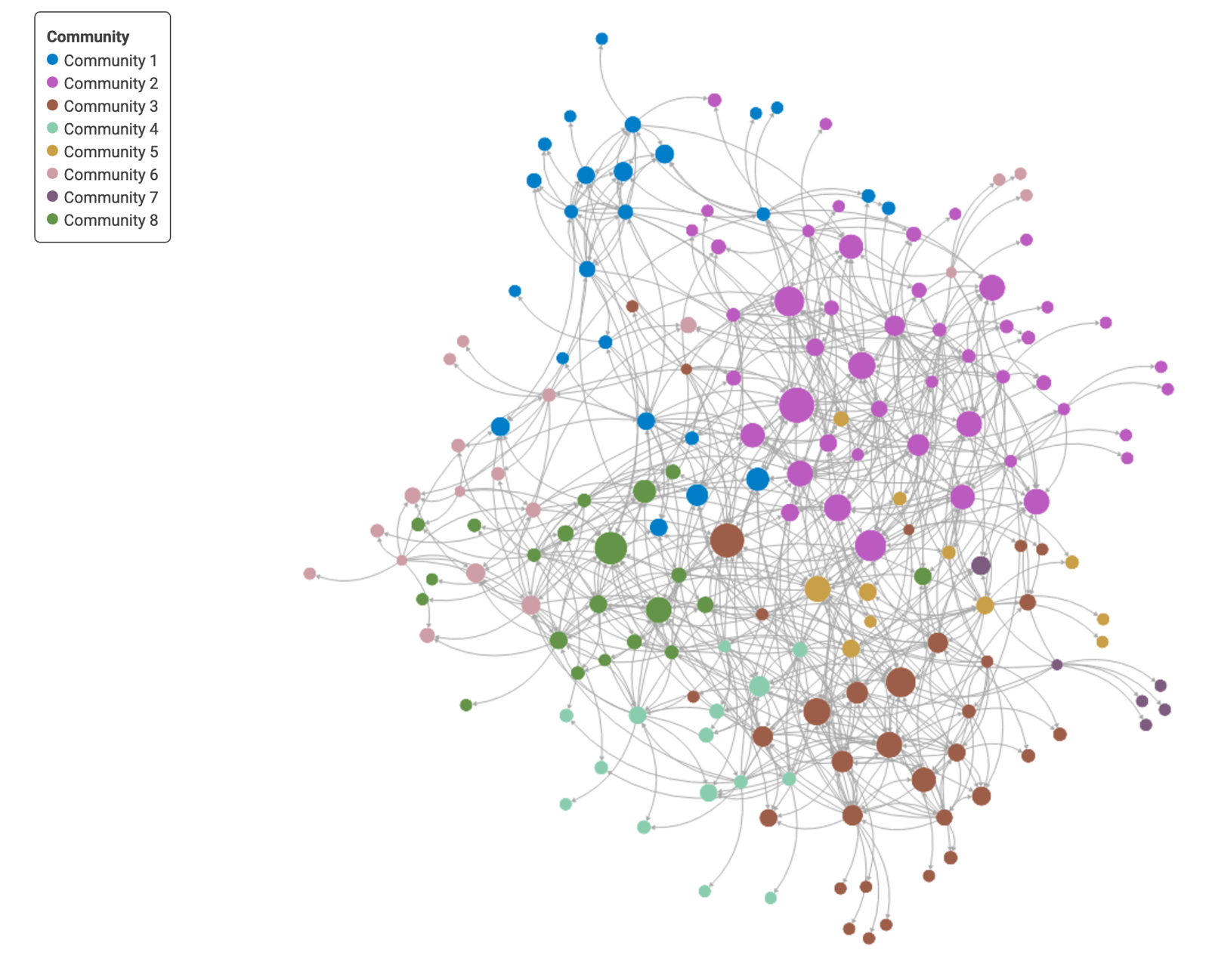
The network maps gave participants something tangible to react to. Our framing throughout was that the data was a mirror, not a scorecard.
The network could show patterns, but it could not explain every relationship or tell the group what those patterns meant. That interpretation belonged to the people in the room.
The most valuable conversations often began with simple questions:
- What do you notice?
- What surprises you?
- What confirms something you already sensed?
- What should we be careful not to overinterpret?
That moved the conversation quickly from data to leadership.
Using Polinode’s AI assistant live in the room
One of the most useful aspects of the experience was the ability to move beyond a set of predetermined network diagrams.
As participants began interrogating their own data, new questions naturally emerged. Rather than saying, “We’ll take that away and analyse it later”, we were able to use Polinode’s AI Networks Chat live in the workshop.
We could ask questions in plain English, explore particular parts of the network, change how the network was displayed, highlight different relationships, and reconfigure the visualisation to respond to what participants were curious about.
That changed the quality of the conversation. Instead of presenting network analysis as a finished product, it became an interactive process of inquiry.
A participant might notice a pattern and ask whether it also appeared in another part of the organisation. We could explore that. Someone might wonder what the network looked like through a different relationship lens. We could remap it. And when a conversation uncovered something unexpected, the AI assistant could help suggest additional questions worth asking of the data.
For facilitators, that felt significant. The technology did not replace the human interpretation. It made it easier to follow the curiosity in the room.
From insight to action
The workshop deliberately did not finish with the network analysis.
Participants moved from Head to Hand, completing a practical Helping Hands Challenge that required coordination, communication, role clarity, trust and collective contribution to something that was larger than them - constructing a prosthetic hand for a child in need overseas. The experience provided another lens on connected leadership: how quickly can a group create direction and alignment, how does contribution get coordinated, and what happens when people need to rely on one another under task pressure?
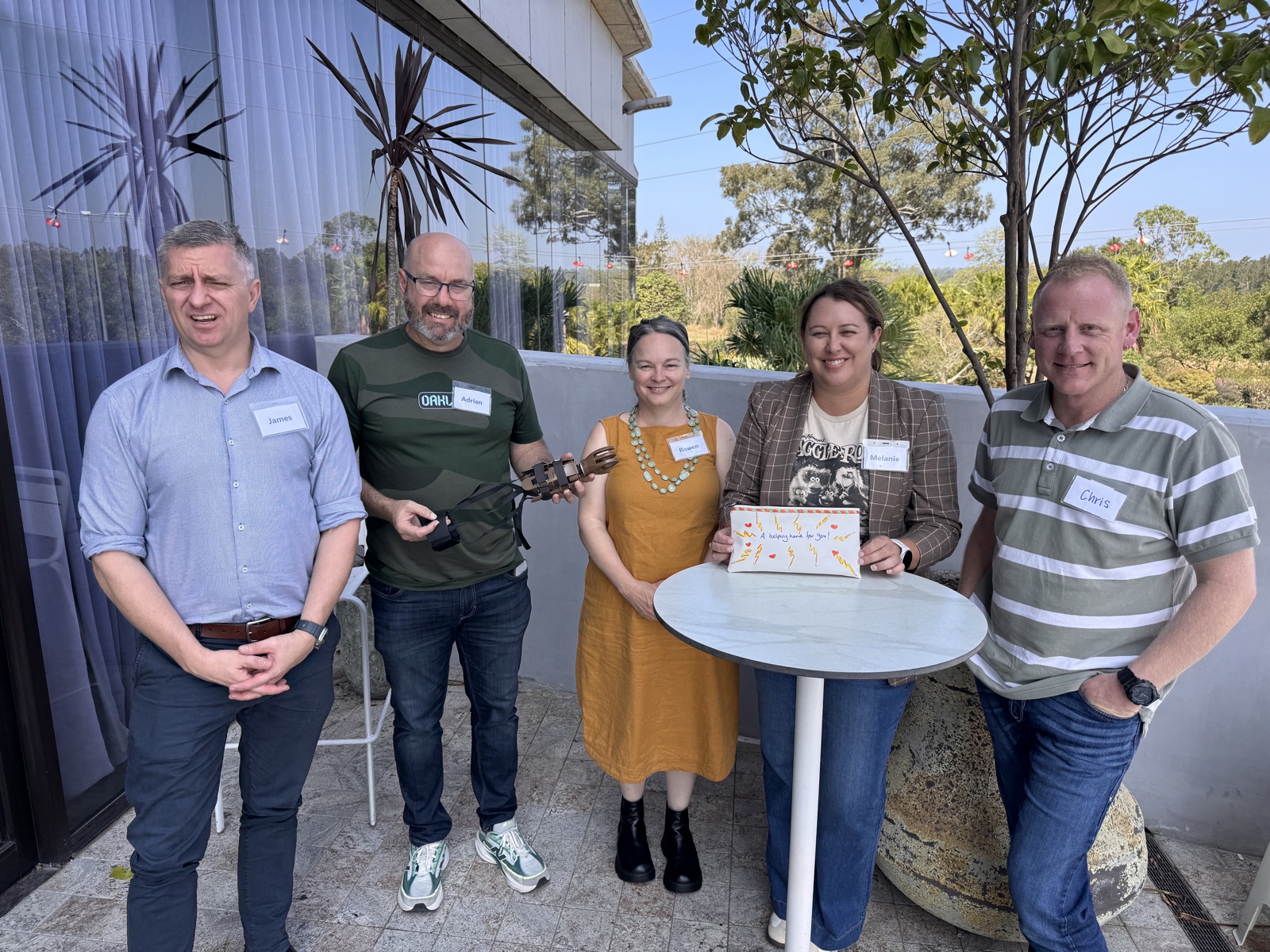
The day then returned to the network. Participants considered the connections they wanted to protect, the useful but underused relationships they could activate, and the important connections that needed more deliberate investment.
The closing challenge was deliberately simple:
One connection. One leadership behaviour. One next step.
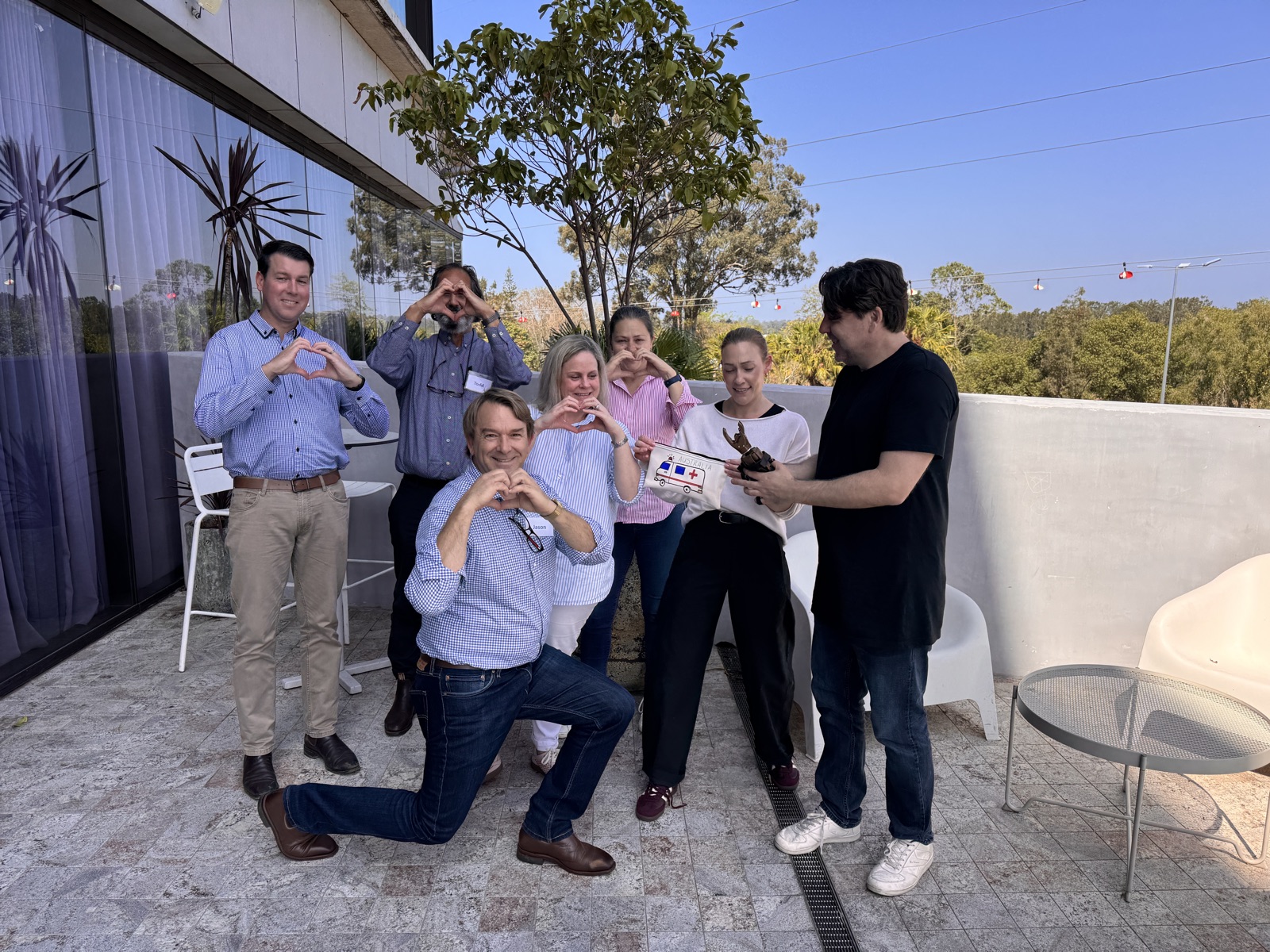
That reflected one of the central lessons from the work. Organisational network analysis is powerful because it can make invisible patterns visible.
But the value does not sit in the diagram. It sits in what leaders notice, the conversations the data creates, and what they choose to do differently afterwards.
For us, Polinode helped turn connection from an abstract leadership idea into something participants could see, question, discuss and act upon.

Ric Leahy

Ric Leahy CSC is Co-Founder and Director of XEd Space, an Australian executive education provider that delivers leadership programs from the Center for Creative Leadership. A leadership facilitator, Ric works with leaders to help them get the best out of themselves and then get the best out of others. He has led, designed and facilitated a senior executive leadership program whose follow-up impact measurement showed participants' leadership effectiveness increasing by up to 40% and their engagement by as much as 57%. Prior to XEd Space, Ric served for more than 21 years in the Royal Australian Navy, leading teams of between four and 160 people. He is a Queen's Medallist, an alumnus of Saïd Business School at the University of Oxford, and combines his real-world leadership experience with a growing interest in neuroscience to bring a range of theoretical approaches to reality.